Online Doctorate Clinical Speech Language Pathology

Program Overview
UC’s fully online Clinical Doctorate in Speech-Language Pathology (SLP-D) is a part-time program designed for practicing speech-language pathologists (SLPs) looking to advance their careers without interrupting their current professional commitments.
Program Highlights
High Quality Education
This program is designed to enhance students’ professional and clinical expertise, equipping them with the skills to mentor and lead in their chosen field. Students will develop critical thinking, clinical problem-solving, and research application skills while gaining expertise in clinical education, teaching, supervision, and mentorship.
Throughout the program, students will collaborate with practicing clinicians and engage with UC’s renowned faculty. Each student will choose between two specialized tracks, healthcare or education, to focus their learning and leadership development for their respective setting.
Flexibility
- A Managable Part-Time Curriculum
- World-Class Faculty Leadership
Support from Application through Graduation
At UC, you’ll have a full support team behind you:
Enrollment Services Advisor: Your partner through the application process, getting enrolled, and starting your program
Student Success Coordinator: Helping you prepare for classes and stay on track
Access to Resources: Access to university resources that will support you through your program including online learning expectations and resources, health and wellness resources, and academic support
Curriculum
This proposed curriculum for the Doctor of Speech-Language Pathology program is subject to change.
- Duration: 2 Years
- Post Baccalaureate Minimum Credits: 45 Credits
- Post Master's Minimum Credits: 45 Credits
| Course | Title/Description | Credit |
|---|---|---|
| CSD8000 | Application of Clinical Science to Service Delivery: Interpreting the Evidence This course will explore the current state of published evidence and expert clinical experience pertaining to the assessment and treatment of select clinical populations, including but not limited to language, communication, voice, and swallowing disorders/disabilities. This seminar style course will promote the development of the student’s ability to provide critical analyses of published evidence to include examination of research design as well as the fidelity of the reported outcomes, including the application of findings to real life clinical scenarios. To support their understanding, an overview of both basic qualitative and quantitative statistics will be provided. |
3 |
| CSD8001 | Epidemiological Trends in CSD: Current State and Future Needs of Clinical Care The field of communication sciences and disorders has seen disproportionate advances in assessment and treatment over the past 40+ years for different populations we serve. This course will evaluate incidence and prevalence of populations and/or diagnoses speech language pathologists’ serve coupled with consideration of current assessment and treatment strengths and limitations. We will consider opportunities for advancement within our field in areas such as novel and innovative methods, tools, and paradigms to improve clinical and quality of life outcomes and access to care in healthcare and educational settings. |
3 |
| CSD8002 | Advanced Application of Research for Clinical Decision Making Students will actively engage in presented clinical case discussions, demonstrating the application of published evidence to support hypothetical assessment and intervention planning for populations we serve in CSD. This course will support a focus on interprofessional collaboration and effective communication. Students will present a real-life clinical case to actively discuss their decision-making process considering and applying evidence-based practice and clarifying short and long-term implications of assessment and treatment decisions. |
3 |
| CSD8003 | Advanced Assessment and Intervention Strategies for CSD This course will investigate the strengths and limitations of select assessment and intervention tools/programs providing students with skills for future application. Students will collaboratively identify how the underlying principles of development, learning, and recovery integrate with the practical implementation of a given assessment or intervention. We will explore how assessment and intervention benefit from collaborative holistic approaches, including the use of culturally responsive methods, involvement of family, facilitators (e.g., interpreters), and other interdisciplinary professionals. |
3 |
| CSD8004 | Professional Leadership and Mentorship This course will cover the dynamics of receiving and providing guidance as a mentor and professional leader for clinicians treating populations across the lifespan. We will explore the scholarship and pedagogy involved in teaching for classroom and clinical settings. Real life experiences, culturally humble and inclusive approaches, interpersonal factors and the direct application of content to healthcare and educational settings will be fundamental to the didactic nature of this course. |
3 |
| CSD8005 | Advanced Instrumentation for Assessment and Treatment in CSD The scope of practice for speech language pathologists (SLPs) includes the provision of specialized instrumentation to evaluate and treat the anatomy and physiology of the speech mechanism, aerodigestive tract, and central nervous system. In clinical practice, SLPs administer some instrumentation techniques (e.g., FEES) while others require a collaborative interprofessional approach, with neighboring disciplines conducting the instrumentation and SLPs engaging in or benefitting from the interpretation process. This course will focus on scientific principles, operational support, and interpretation factors associated with the use of acoustic, aerodynamic, pressure monitoring, and imaging (e.g., ultrasound, MRI, and endoscopic and fluoroscopic) technology. Population specific focus will depend on the specialty areas of the students but may include voice and swallowing disorders, speech sound disorders, motor speech disorders, craniofacial anomalies, AAC, and/or language and literacy. |
3 |
| CSD8006 | Ethical Considerations Related to Access & Social Well-Being in CSD This course will cover an in-depth analysis of how current and desired standards of care involving assessment, intervention, and access to CSD services in the educational or medical environment are impacted by issues of diversity, clinical need, social wellbeing, cultural and policy influences. Each of these issues will be explored and defined. Emphasis will be placed on examination of challenges of each issue and how the profession should and could improve with an expanded understanding and novel approaches to care. Students will be guided to develop solutions-oriented projects for identified needs in designated settings. |
3 |
| CSD8007 | Culminating Project I: Topic, Team, Foundation, and Approach In this course, the SLP-D student will develop a clinically applied culminating project guided by their specialty area mentor. The student will develop the focus, academic approach, and a research team required to complete the project. This course is the first of a three-part series and emphasizes preparing the student for project design, initiating the literature review, and writing and submitting IRB documentation. |
2 |
| CSD8008 | Culminating Project II: Implementation and Execution The SLP-D student, with the support of their project chair and identified area specialist, will organize and execute the approved culminating project developed in CSD 8007 - Culminating Project I. |
2 |
| CSD8009 | Culminating Project III: Findings and Conclusions The SLP-D student will present their culminating project to their committee, faculty and clinical specialty peers in the form of a formal defense presentation and written manuscript outlining the full scope and application of the approved culminating project carried out through CSD 8007, CSD 8008, and this final course (CSD 8009). |
2 |
| CSD8011 | Advances in Clinical and Educational Practice Significant technological advances in the areas of assessment, intervention, outcome monitoring, delivery models and clinical training are now a part of mainstream clinical care and clinical education. This course will examine and review the current trends and strengths and limitations in existing and emerging technologies within communication sciences and disorders. Students will be expected to develop a framework for a technologically based application, program or protocol to be used in the clinical and/or classroom setting. |
3 |
| CSD8012 | Neuroimaging and Neurobehavioral Metrics in CSD The use of neuroimaging to identify and quantify the function of neural pathways, cortical and sub-cortical regions integral to neuro development and recovery of language learning, cognition, motor speech, voice and swallowing function is increasingly evident in the research. This course will investigate how findings from these areas of published research relate to actual functional outcomes and how practical applications of neuroimaging can inform care. |
3 |
| Course | Title/Description | Credit |
|---|---|---|
| EDLD7038 | Leadership for Social Justice This course is designed to develop competencies necessary for entry-level administrative positions. The goal of this course is to provide participants with a theoretical knowledge base concerning issues of social justice in educationalleadership. The course focuses on the many ways inwhich educational leaders can actively oppose economic, social, and political injustices in the American public school system. |
3 |
| EDLD7035 | Educational Leadership Theory This course is designed to introduce the student to the theories and practices of educational leadership and organizational behaviors in school systems. Through a series of individual and collaborative activities, participants will begin to understand and appreciate the challenges faced by modern school leaders. |
3 |
| Course | Title/Description | Credit |
|---|---|---|
| EDLD8035 | School Law This course offers an overview of legislative, executive, and judicial action pertaining to the education with a focus on: the rights of students;the rights of PreK-12 personnel; the responsibilities of school and state agency officials; due process hearings; gender equity andsexual harassment; race an international origin discrimination; legal problems of religious and private schools; search and seizure in schools; legal aspects of the formulation of policy in schools; complementary methods for examining legalissues in education; and recent developments in education law. This course also offers a survey offederal and state statutes, regulations, executiveagency opinions, and published research with respect to the rights of students and personnel and corollary responsibilities of school and stateagency officials, with a social justice approach. Additionally, this course examines a historical approach to meeting the needs of all students, embedded within the context of federal laws and policies. It also provides an overview of federal laws that mandate the success of students with varying social, emotional, and academic needs. |
3 |
| SPED7001 | Overview of Special Education Law This course provides students a foundational understanding of the modern practices within special education. Students gain understanding by studying how the field has evolved throughout time. Information presented in this course is contextualized through various means including: understanding of human need, law/policy, and current research. From this course, students gain an initial understanding of the legal and ethical roles and responsibilities of a professional within the field of special education. |
3 |
| EDST7001 | Politics of Education This course explores a range of political issues in American education. The primary focus is on understanding the social and political context that shape educational policies in schools. It examines political decisions that affect the national, state, and local goals of schooling. |
3 |
| CSD8010 | Clinical Immersion This course will be tailored to each student to support them in gaining advanced clinical skills and knowledge in a chosen specialized area of practice. Students may engage in intensive clinical work, collaborate with experienced clinicians, work on a specialized clinical certification (e.g., board certification) and/or participate in scholarly activities related to their chosen specialization. This course will provide opportunity for students to apply theoretical knowledge to real-world clinical challenges, enhance clinical reasoning, and develop a strong foundation for future leadership roles in the field of speech-language pathology. |
3 |
| CSD8013 | Advanced Language Learning and Reading This course will explore the fundamentals of language and learning, including reading development for children using a holistic approach that considers culturally responsive theories and practices. In this seminar style course, we promote independent critical thinking of the published evidence to support examination of the child in context. Student learners are provided with case-based learning opportunities to proffer the integration of clinical principles, theoretical foundations, and translational application of the evidence to bridge the research to practice gap. To support this knowledge translation, students are provided with opportunities to engage in comprehensive assessment practices that inform that pathway toward intervention in an inclusive manner. |
3 |
| Course | Title/Description | Credit |
|---|---|---|
| HCA7001 | Health Systems Management 1: Organization & Delivery The course is intended to provide the student with a systems perspective of U.S. health and health care structure and function. As the MHA Program’s introductory course, it provides a basis for all subsequent courses including leadership, systems analysis, finance and economics, quality improvement, policy and law, and others. Topics include an overview of the social, political, economic and structural dynamics which shape health care in the United States as well as current and likely future imperatives health care managers will face. Evaluation is competency-based; students will be expected to demonstrate proficiency at seeking and applying evidence to managerial decision-making, the effective communication of ideas, and a number of different types of analyses relevant to cases and issues affecting U.S. healthcare today. |
3 |
| HCA7002 | Health Systems Management 2: Principles of Leadership This course provides an introduction and overview to healthcare leadership, human resources management, and organizational behavior in healthcare settings, reflecting the uniqueness of this sector as well as the universal concepts and principles utilized in the development of effective healthcare administrators and leaders. This course integrates theory with practice through readings, written assignments, group projects, and discussion boards from different organizational perspectives. The development of leadership, managerial and organizational skills will be accomplished through a strong emphasis on self-reflection and self-analysis utilizing the tools of the course. This course aims to provide a relevant understanding of organizational dynamics such as performance, organizational culture, teamwork, individual and shared values, and cultural competency. It will examine how healthcare leaders and their organizations relate to each other internally and to their external environments. Topics include values-driven leadership, team effectiveness, self-awareness, emotional intelligence, conflict management, human resources management, employee behavior and appraisal, and assessment and evaluation of leadership performance. This course emphasizes the reflection of the students’ past and current experiences with the integration of current evidence-based leadership and human resources management principles. The students will be required to submit their feedback from self-evaluation assignments, surveys, inventory tools, and group work that is intended to provide insight, awareness, interdisciplinary collaboration, and professional and personal development for ongoing growth in healthcare leadership roles. |
3 |
| Course | Title/Description | Credit |
|---|---|---|
| HCA7031 | Health Policy 1: Health Policy & Regulation This course is designed to provide students with an overview of how policy is developed and how policies can affect health care in the United States. The course prepares students to understand the steps in the policy creation process and then apply concepts in policy analysis and advocacy. There are five focus areas: need and demand, healthcare finance, ethics & law, preparedness, and policy evaluation. Within the five focus areas, we will examine topics using Bardach’s Eightfold Path: problem definition, agenda setting, implementation, evaluation, and modification. The course will present case studies and readings about real-world problems that health professionals face. |
3 |
| HCA7033 | Global Health Systems This foundational course uses the subject matter of global health to teach students the critical management skill of how to analyze the structure and functions of healthcare systems. Once mastered, these skills can be applied to the assessment of systems at any level and in any type of community or setting. As the COVID-19 pandemic has demonstrated to all, American healthcare managers working in a world where global health issues are of immediate and critical relevance to strategic and day-to-day operations. The building blocks of health care systems, their impacts on intermediary and outcome variables, and key stakeholder and other analytical tools will be applied to various national systems from high and low-resource nations around the world. Cultural, social, environmental, and other variables impacting understanding of health and illness, and the policies and systems built to address them, will be examined. In addition to institutional health care systems, the roles played by the marketplace, transnational organizations, private entities, and others in global health care will be explored. |
3 |
| CSD8010 | Clinical Immersion This course will be tailored to each student to support them in gaining advanced clinical skills and knowledge in a chosen specialized area of practice. Students may engage in intensive clinical work, collaborate with experienced clinicians, work on a specialized clinical certification (e.g., board certification) and/or participate in scholarly activities related to their chosen specialization. This course will provide opportunity for students to apply theoretical knowledge to real-world clinical challenges, enhance clinical reasoning, and develop a strong foundation for future leadership roles in the field of speech-language pathology. |
3 |
| CSD8013 | Advanced Language Learning and Reading This course will explore the fundamentals of language and learning, including reading development for children using a holistic approach that considers culturally responsive theories and practices. In this seminar style course, we promote independent critical thinking of the published evidence to support examination of the child in context. Student learners are provided with case-based learning opportunities to proffer the integration of clinical principles, theoretical foundations, and translational application of the evidence to bridge the research to practice gap. To support this knowledge translation, students are provided with opportunities to engage in comprehensive assessment practices that inform that pathway toward intervention in an inclusive manner. |
3 |
Admission Requirements
Prerequisites
- Graduated with an ASHA-accredited SLP master’s degree program.
- Hold current state licensure in SLP in good standing.
- Meet criteria for a Certificate of Clinical Competence (CCC SLP), with at least 3 years of clinical practice.
- Maintained a GPA of 3.0 or higher for graduate work.
Complete the online application and submit the application fee.
Standard Application Fees:
- $65.00 for domestic applicants to most degree programs
- $20.00 for domestic applicants to Graduate Certificates
- Fee waivers are automatically applied for applicants who:
- are currently serving in the US armed forces
- are veterans of the US armed forces
All applicants are required to upload unofficial transcripts during the application process, showing all undergraduate and graduate course work completed, including degrees granted and dates of conferral.
Official transcripts are not required until the student has received and accepted an offer of admission from the university. Once the offer has been confirmed, the student must submit official transcripts.
Students who have received degrees from the University of Cincinnati do not need to submit official paper copies of their UC transcripts.
Transcripts can be submitted electronically or by mail. To see if your transcript(s) can be ordered electronically, visit the links below and search for your previous school(s).
- Parchment
- Please select “University of Cincinnati – Main Campus” as the recipient of your transcript.
- National Student Clearinghouse
- Please have your transcript sent directly to grad.admissions@uc.edu.
If you do not see your past school(s) listed on either site, please contact the school(s) directly. Then, mail your sealed, unopened, official transcripts to:
Please mail sealed, unopened, official transcripts to:
University of Cincinnati
Graduate Admissions
2618 University Circle
PO Box 210091
Cincinnati, Ohio 45221-0091
Submit an updated resume including your educational background, clinical experiences, leadership, and extracurricular experiences
Submit 3 letters of recommendation (LOR) from clinical experts, supervisors, or individuals who can speak to your academic potential for this advanced degree.
Submit a 2–3 page written statement outlining your research interests, professional experience and achievements, and your motivation for pursuing the SLP-D at UC.
In your statement, please address and describe each of the following:
- Your research interests and areas you would like to explore during your clinical doctorate.
- Professional experiences, achievements, leadership activities, and accomplishments that have prepared you for doctoral-level work.
- Your reasons for pursuing an SLP-D degree and how the University of Cincinnati's SLP-D program aligns with your career goals and professional aspirations.
Application Deadlines
| Term | Application Deadline | Classes Start |
|---|---|---|
| Fall 2027 | January 11, 2027 | August 23, 2027 |
Tuition & Fees
The University of Cincinnati's online programs allow students to pursue degrees without having to quit their jobs. Our online courses offer the same quality education found on campus in a modern format that fits students’ tight budgets and busy schedules.
The University of Cincinnati's online course fees differ depending on the program.
To view tuition information and program costs, visit the Online Program Fees page.
Accreditation & Rankings
- The University of Cincinnati and all of its regional campuses are accredited by the Higher Learning Commission.
Outcomes & Licensure
Federal regulations require the University of Cincinnati to publicly disclose whether completion of certain programs that lead or may lead to professional licensure or certification would meet a given state’s educational requirements for a specific professional license or certification required for employment in an occupation (regardless of whether the program is on-ground, online, or hybrid). To learn whether a University program meets a given state’s educational requirements, please visit the University of Cincinnati State Authorization webpage.
Faculty
Meet the Program Director
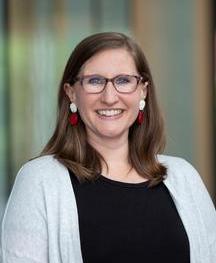
Amanda Simmons
Assoc Professor - Educator, CAHS Communication Sciences & Disorders
357 HSB

Ready to get started?
We offer over 130 degrees from undergraduate to doctoral programs. Each program is supported by a team of Enrollment Services Advisors (ESAs) who are here to help answer any questions you have.
Frequently Asked Questions
General Clinical Speech Langauge Pathology Degree
FAQs
What is a clinical doctorate in speech-language pathology?
A clinical doctorate in speech-language pathology (SLP-D) is a professional degree that provides advanced training for practicing clinicians. It focuses on sharpening clinical skills, leadership, and applying research to real-world healthcare or educational settings. This degree helps professionals transition into leadership roles without the heavy research focus of a PhD.
The online SLP-D program at UCO offers specialized tracks in healthcare and education to align with your specific professional goals. This advanced degree prepares you for leadership by emphasizing clinical problem-solving and mentorship skills that are essential for modern practice.
How long does it take to become an SLP?
Becoming a licensed speech-language pathologist usually starts with a four-year bachelor's degree followed by a two-year master's program. After finishing school, graduates must complete a supervised clinical fellowship year to earn their full credentials. All in all, most students spend about six to seven years in total on their education and initial training.
What are the prerequisites for speech pathology programs?
Graduate speech pathology programs typically require a bachelor's degree in communication sciences and disorders or a related field. Applicants often need to submit letters of recommendation, a personal statement, and proof of clinical observation hours. Most programs also look for a strong grade point average and specific prerequisite coursework in anatomy and phonetics.
UC’s admission requirements include holding a master's degree from an accredited program and having at least three years of clinical practice experience. These standards ensure that you join a cohort of dedicated professionals ready to advance through high-level clinical and leadership training.
What is the average salary for a speech pathologist?
Speech pathologists earn competitive wages that vary based on their experience level and where they work. The 2024 median pay for Speech-Language Pathologists was $95,410 annually. Professionals in hospitals or schools typically see different pay scales, with many factors influencing their yearly income. On average, those advanced in the field can expect stable growth and many opportunities for career advancement.
Is a doctorate in speech pathology worth it?
Earning a doctorate in speech pathology can be a smart move for those wanting to reach the top of their field. This advanced degree opens doors to high-level leadership, teaching, and specialized clinical roles that a master's degree might not cover. It allows you to become a recognized expert while gaining the skills to mentor others in the profession.
The online speech-language pathology program at UCO focuses on real-world relevance by building critical thinking and research application skills. This degree strategically sets you up for post-graduation success by providing the credentials needed to lead in specialized healthcare or educational environments.
What is the difference between SLP and speech therapy?
While these terms are often used interchangeably, speech-language pathology (SLP) refers to the full professional field and scientific study. Speech therapy is a more common term that typically describes the actual treatment and sessions provided to patients. Essentially, the pathologist is the professional who manages the entire process of diagnosis and care.
What careers are in communication sciences and disorders?
A degree in communication sciences and disorders leads to diverse jobs in schools, clinics, and private practices. You can work as a researcher, a clinical supervisor, or even an administrator in a healthcare system. These roles allow you to make a direct impact on the lives of people with speech, hearing, or swallowing challenges.
UC graduates can pursue advanced paths through the healthcare or education tracks, which focus on leadership and professional development. This program provides the advanced expertise needed to excel in diverse settings and take on complex roles within the field of speech therapy.
Online Clinical Speech Langauge Pathology Degree
FAQs
Can you get a speech pathology degree online?
Yes, you can earn various speech pathology degrees through flexible online learning platforms. These programs are designed to provide the same high-quality education as traditional settings while allowing students to balance work and life. Most online paths include a mix of virtual classes and local hands-on clinical experiences.
The University of Cincinnati offers an online speech pathology degree program specifically for practicing clinicians who want to advance their careers without pausing their work. This part-time format provides full support from advisors to help you manage your studies alongside your professional commitments.
Are online speech language pathology programs accredited?
Many online programs hold the same high-level accreditation as their on-campus counterparts to ensure they meet professional standards. Accreditation from recognized national bodies guarantees that your degree will be respected and that you are receiving a quality education. It is important to verify that a program is properly vetted before you begin your studies.
UC's online doctorate is accredited by the Higher Learning Commission, ensuring the program meets rigorous academic requirements. This status confirms that you are receiving a top-tier education that prepares you for the highest levels of professional achievement.
How do online SLP programs handle clinical requirements?
Online SLP programs usually coordinate clinical requirements by allowing students to complete hours at approved sites near their homes. Faculty members and local supervisors work together to monitor your progress and ensure you gain the necessary hands-on skills. This approach ensures you get the same practical experience as students in traditional face-to-face programs.
Can I work while getting an SLP degree online?
Flexible online speech-language pathology programs are specifically built for students who need to balance their graduate studies with a job. These part-time options allow you to apply what you learn in class directly to your daily clinical work. This format makes it possible to earn an advanced degree while maintaining your current professional role.
UC’s fully online speech pathology degree program is a part-time curriculum designed specifically for practicing clinicians to advance without interrupting their work. You will have a dedicated student success coordinator to help you stay on track and manage your busy professional schedule.
How long does an online SLP doctorate take?
The time it takes to finish an online doctorate depends on the specific requirements and your own pace of study. Most of these professional programs are designed to be completed in about two to three years of part-time work. This timeline allows busy clinicians to balance their coursework with their full-time careers.
The online doctorate in speech pathology at UC is a two-year program that requires a minimum of 45 credits. This structured path is designed to fit into your professional life while ensuring you gain the advanced leadership skills needed to succeed.
Can clinical hours for SLP be completed remotely?
Some clinical requirements for advanced degrees may allow for remote telepractice or specialized simulation training. However, many programs still require a portion of your hours to be completed in person with a licensed supervisor. The specific rules often depend on national standards and the regulations of individual state boards.
Are online speech pathology degrees recognized by employers?
Employers across the country recognize and value online degrees that come from accredited and respected universities. These programs often follow the same curriculum and are taught by the same expert faculty as on-campus options. Hiring managers focus more on your clinical experience and the reputation of the school rather than the format of your classes.
The online speech-language pathology program at UCO is led by world-class faculty who are recognized leaders in the field. This ensures your degree carries the professional weight needed to pursue advanced leadership and specialized clinical roles in any healthcare or school setting.
UC Online
FAQs
What makes UC Online different?
UC Online combines the flexibility of online learning with the quality and reputation of the University of Cincinnati. As one of the first universities to offer online courses, UC has decades of experience designing programs that help busy professionals and lifelong learners succeed.
What really sets UC Online apart is the personalized support you'll receive throughout your educational journey. From application through graduation, you'll have access to a dedicated support team (including your own Student Success Coordinator) who can help you navigate coursework, connect with resources, and stay on track. Combined with nationally recognized faculty, flexible learning options, and career-focused programs, UC Online is designed to help you reach your goals without putting your life on hold.
Will my degree say “UC Online” or “University of Cincinnati Online”?
No. Your diploma and transcript will be issued by the University of Cincinnati and will not specify that your program was completed online. You'll earn the same respected University of Cincinnati credential while enjoying the flexibility of online learning.
How do online classes at UC Online work?
Most UC Online students complete their coursework asynchronously, meaning they can learn when it's most convenient for their schedule rather than attending classes at a set time. This gives you the flexibility to earn your degree while balancing work and personal commitments.
Some programs may include scheduled online meetings or hands-on experiences, but these vary by program and are clearly communicated on each program page.
Can I work full-time while earning my degree?
Absolutely. Many UC Online students balance full-time careers while earning their degree or certificate. Our programs are designed with working professionals in mind, making it possible to continue your education without putting your career on hold.
Whether you're looking to advance in your current role or prepare for a new opportunity, UC Online can help you achieve your goals while continuing to work full-time.
What kind of support can I expect as a UC Online student?
At UC Online, you're never on your own. Every online student is supported by a dedicated Student Success Coordinator who provides personalized guidance from enrollment through graduation. Whether you need help navigating coursework, connecting with campus resources, or staying on track, you'll have someone in your corner.
Beyond one-on-one guidance, you’ll also have access to academic advising, Career Services, technical support, library resources, and the many services available across the University of Cincinnati.
What financial aid or scholarship opportunities are available for online students?
UC Online students may be eligible for many of the same financial aid opportunities as on-campus students, including federal financial aid, loans, grants, and select scholarships. The University of Cincinnati also offers scholarships for eligible online students and programs.
Financial aid and scholarship opportunities vary based on your eligibility and program. If you have questions about paying for your education, connect with a UC Online enrollment advisor. We can help you explore your options, guide you through the process, and connect you with the appropriate resources.
How do I apply to UC Online?
The first step to apply to UC Online is to complete an online application for your program of interest. Depending on the program, you may also need to submit supporting materials such as transcripts or other admissions documents.
Need help along the way? A UC Online enrollment advisor can answer your questions and guide you through each step of the application process. Connect with your enrollment advisor today.