Online Associate of Applied Science in Rural Population Health
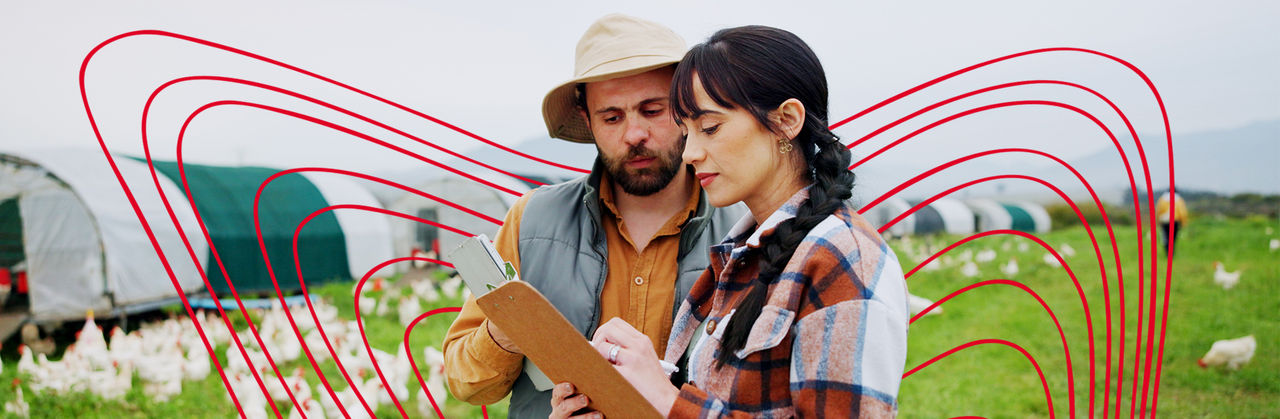
Rural communities face unique public health challenges that require leaders who are passionate and connected to their communities. Graduates of the University of Cincinnati's Associate of Applied Science in Rural Population Health program will be prepared to educate, advocate for, and lead rural communities with a compassionate and mindful approach to their distinct needs.
Program Overview
In rural communities, making a meaningful difference means being there for your neighbors and helping out when it matters most. This is never more true when it comes to rural population health where dedicated and passionate members of the community often make the biggest impact.
In the University of Cincinnati's Associate of Applied Science in Rural Population Health program, you'll learn to be more than just a healthcare professional. In this program, the skills that you gain will prepare to you to be an influential leader with comprehensive knowledge of community engagement, rural health policy advocacy, and health challenges facing rural populations. Equipped with a collaborative approach to public health, graduates of this program will be ready to build stronger and healthier rural communities for generations to come.
Whether you choose a career that's close to home or with an organization that works in rural population health, the dedicated faculty at the University of Cincinnati are ready to help you get started in this inspiring and fulfilling field.
Online Associate of Applied Science in Rural Population Health
High-Quality Education
Students enrolled in the Associate of Applied Science in Rural Population Health program will complete a curriculum designed to give them the skills to address public health needs in rural areas. This program places particular emphasis on communication strategies with these unique populations, but students will take courses in other areas such as:
- Child and maternal health
- Health literacy for low literacy areas
- Policy, advocacy, and lobbying for rural communities
- Zoonotic diseases in rural areas
- Nutrition for low resource areas
- Chronic disease management
Students enrolled in this program will also have the advantage of working with nationally acclaimed faculty who have extensive experience working in rural community health and have worked with agencies such as the U.S. Department of Health and Human Services and the Centers for Disease Control and Prevention.
In addition to coursework that will teach evidence-based principles of rural health, students will gain knowledge of specific health issues in rural areas from individuals with real-world experience in the improvement of rural community wellness.
Flexibility
- 100% online - no campus visits required
- Option to transfer credits
- Part-time and full-time scheduling, so you have the flexibility to balance work and family obligations while completing your degree
Support from Application through Graduation
At UC, you’ll have a full support team behind you:
- Enrollment Services Advisor: Your go-to resource during for any questions about the admission process and first-term enrollment
- UC Clermont Academic Advisor: Provides student support for academic planning, curriculum navigation, and graduation
- Student Success Coordinator: Helps you stay informed about university policies, dates, and deadlines so you stay on track
- Access to Resources: Access to university resources that will support you through your program including online learning expectations and resources, health and wellness resources, UC Clermont Advising, and UCO academic support
Curriculum
The online Associate of Applied Science in Rural Population Health program at the University of Cincinnati is 61 credit hours and designed to prepare students to be effective and knowledgable leaders with respect to public health issues affecting rural communities.
Prior to registering for courses, please consult with your Academic Advisor to determine how to navigate this course carousel. The Academic Advisor will be able to highlight when courses will be offered and in which order you should register for courses.
| Course | Title/Description | Credit |
|---|---|---|
| INTR1020 | Introduction to Science Professions This course serves as an FYE course for biology and chemistry majors as well as students with an interest in professional careers such as dentistry, pharmacy, medicine, and veterinary medicine. This course is designed to introduce students to different careers in science and to familiarize students with the college support services available to them. Students will also have the opportunity to gather and share information about their chosen science profession as well as begin the development of skills necessary for them to be successful in their science courses. |
1 |
| RPH1001 | Introduction to Rural Population Health This course introduces the concept of rurality and its impact on health outcomes and access to healthcare. Students will explore health disparities, cultural influences, and the role of health professionals in promoting equity and public health in rural communities through a strengths-based approach. Emphasis is placed on theoretical knowledge, practical skills for rural health paraprofessionals, and a global perspective on the public health system. |
3 |
| RPH1002 | Cultivating Optimal Health in Low-Resource Areas In this course, students will explore the optimal health model and examine the unique challenges faced by low-resourced populations in achieving wellness. They will also investigate the various strategies for assisting these populations in overcoming these challenges. |
3 |
| PSYC1001 | Introduction to Psychology This course is designed to give an overview of the field of Psychology and its major sub-fields, including (but not limited to) physiological (biology of behavior, consciousness, perception), cognitive (learning, thought, language), social, organizational, developmental, personality, and psychopathology and its treatment. Students will be equipped to compare the advantages and disadvantages of the various research methods used in the field. Students will be encouraged to critically think about the psychological theories discussed, and be able to apply those and their findings to their lives. |
3 |
| HPE1003 | Introduction to Global Health This course is an introduction to the subject of global health with emphasis on significant global health issues and factors, such as information sources, health systems, cultural values, and collaborations among agencies, which influence health status and disease management. Other factors may include economic factors, individual health risk factors, climate change/environmental health, implementing and evaluating health programs, applying theory and measuring outcomes of programs in global health, ethical and human rights concerns in program implementation, and health education in prevention and intervention efforts. There is a focus on improving health through understanding and management of diseases, injuries, and disasters and other health-related issues which can impact health and wellness of individuals across the world. |
3 |
| HPE1004 | Introduction to Epidemiology This course covers the applications of epidemiological methods and procedures to study the distribution and determinants of health and diseases, morbidity, injuries, disability, and mortality in populations. Epidemiological methods for the control of conditions such as infectious and chronic diseases, mental disorders, community and environmental health hazards, and unintentional injuries are discussed. Other topics include quantitative aspects of epidemiology, such as data sources, measures of morbidity and mortality, evaluation of association and causality, study design and analysis, and disease screening. |
3 |
| STAT1034 | Elementary Statistics I An introduction to statistics for students without a calculus background. The course covers data analysis (numerical summaries and graphics for describing and displaying the distributions of numerical and categorical data), the basic principles of data collection from samples and experiments, elementary probability, the application of the normal distribution to the study of random samples, statistical estimation (construction and interpretation of one sample confidence intervals), and an introduction to hypothesis testing (the structure of one sample hypothesis tests and the logic of using them to make decisions). |
3 |
| HSST1041 | Motivational Interviewing I This course is designed to introduce participants to the theoretical basis of the Motivational Interviewing (MI) style and to help them acquire skills and strategies for using MI in various helping situations. |
3 |
| ENGL1001 | English Composition English Composition 1001 is a writing-centered course that emphasizes the careful reading, analytical thinking, and persuasive strategies inherent in researching and writing within an academic community. Students learn that rhetorical knowledge is the basis of composing while learning to write with purpose, audience, context, and conventions in mind. Students develop rigorous academic research practices: how to locate and evaluate primary and secondary sources relevant to their line of inquiry and position their own ideas in conversation with public writing. Students also engage in regular self-reflection: articulating what they know, what they can do, and how to apply their knowledge and skills in various contexts. |
3 |
| ENGL2089 | Intermediate Composition Intermediate Composition is a writing-centered course that builds on what students learn in first-year composition and focuses students’ attention on theoretical underpinning of how meaning is made, understood, and communicated within and across various discourse communities and genres. The course emphasizes critical reading and writing, advanced research and analysis skills, and rhetorical sensitivity to differences in academic, professional, and public composing. This course challenges students to engage in substantive projects drawing on primary research and source analysis methods and asks students to document, communicate, and reflect on their research. |
3 |
| RPH2001 | Chronic Disease Management This rural health-focused course offers a thorough introduction to chronic diseases that commonly affect underserved rural populations. Through an engaging curriculum, students will explore risk factors, prevention strategies, recommended screenings, and management approaches tailored for low-resource settings. Special emphasis is placed on addressing the unique needs of vulnerable groups, including grandparents raising grandchildren, caregivers of aging parents, and individuals with disabilities. Students will learn essential service skills for community-based care, focusing on confidentiality, care coordination, documentation, and chronic disease management. |
3 |
| RPH2003 | Policy, Advocacy, and Lobby Engagement for Rural Communities This course will increase your familiarity with public health policy, interpretation, and public health decision-making. Specifically, it examines how to apply advocacy and agenda-setting principles in public policy-making. This course equips you with the knowledge and skills to effectively navigate the policy landscape, communicate their research, and influence policy decisions. |
3 |
| RPH2004 | Zoonotic Diseases in Rural Areas This course will equip you with the skills to identify and understand disease reservoirs, vectors, and hosts. You'll explore disease surveillance, investigation, and response strategies, and learn about these diseases' causes, symptoms, and public health significance. Focusing on integrated pest management (IPM) principles, we'll examine how agricultural development and urbanization influence the emergence, reemergence, and transmission of zoonotic diseases, both regionally and globally. |
3 |
| RPH2005 | Community-Based Maternal and Child Support Embark on a transformative journey to become a knowledgeable and compassionate advocate and support person for maternal and child health. This course equips you with the knowledge and skills needed to support families during these crucial moments. You will explore the roles and responsibilities of caregivers, gaining insights into prenatal, labor and delivery, and postpartum periods. Learn to recognize warning signs during pregnancy and the importance of prompt care by a licensed professional. |
3 |
| RPH2071 | Essentials of Public Health Programs This skills-building introductory course explores the world of public health programming. Students will link data findings to settings and situations for public health practice. The course introduces students to data collection methods appropriate for the selected public health context. A project-based approach will be used to address priority population health issues through simulated planning and facilitation of evidence-based public health programs and interventions. Foundations of the art of facilitation to drive improvements in population health will be introduced. |
3 |
| HCMT2012 | Health Information Ethics An overview course that focuses on the study of healthcare codes of ethics, patient’s bill of rights, medical malpractice cases, and legal and ethical issues for medical offices. The course will examine the concepts of privacy, security, confidentiality, healthcare legislation, and regulations relating to the maintenance and use of health information. |
3 |
| SW2050 | Families in America Through the lens of critical theory, the overarching goal of this course is to study the diversity of American families from a multigenerational developmental perspective. The family will be examined as a social system moving through time, with a focus on the challenges the family faces as they go through the family life cycle from courtship to old age. Because families are embedded within a social environment, we will explore how culture and societal forces affect the family life, and how certain policies, structures, attitudes, and behaviors marginalize and discriminate against non-traditional families. This course focuses on the ways in which the social work profession responds to contemporary families under stress, and how the values and ethics of the profession guide social work practice. In order to understand family processes that enable the family to meet the needs of its members, students will learn the importance of the person-in-environment fit, specifically examining how diversity, equity and inclusion issues impact family from a systems perspective. Students will learn about the major theoretical models that help us understand how family’s function such as systems, role, feminist, intergenerational, social learning, conflict, and ecological theories. |
3 |
| HIST1001 or HIST1002 | United States History I or United States History II Students may take either of these United States History courses to fulfill this degree requirement. |
3 |
| BoK: NS | Natural Science Elective Student will select a Natural Sciences (NS) Breadth of Knowledge (BoK) elective. |
3 |
Admission Requirements
Admission to the University of Cincinnati’s online Associate of Applied Science in Rural Population Health is open to all students with a high school diploma or GED and the desire to succeed in college. Although admission is open, students accepted into the program must meet the academic standards of the program to advance to upper levels of study.
First-Year:
- You are currently a high school senior or have a high school diploma, GED, or home-school equivalent.
- As a first-year student, you will need to take an English and mathematics placement test if you have not obtained the minimum ACT/SAT score required for exemption. These tests do not affect your admission; however, the results are essential for your proper placement in classes. You must complete placement tests before you register for English or mathematics courses. All placement tests are given free of charge.
Transfer:
- Transferability is based on school accreditation, course/content comparability (including evaluation of practical assignments), year taken, and final grade.
- Submit all official transcripts for every school attended. Learn more about requesting your transcripts.
- If you have earned fewer than 24 semester or 36 quarter college credits, you must submit high school transcripts as part of your transfer application.
Application Deadlines
| Term | Application Deadline | Classes Start |
|---|---|---|
Spring 2027 Summer 2027 Fall 2027 |
November 15, 2026 March 15, 2027 July 15, 2027 |
January 11, 2027 May 10, 2027 August 23, 2027 |
Tuition and Fees
The University of Cincinnati's online programs allow students to pursue degrees without having to quit their jobs. Our online courses offer the same quality education found on campus in a modern format that fits students’ tight budgets and busy schedules.
The University of Cincinnati's online course fees differ depending on the program.
To view tuition information and program costs, visit the Online Program Fees page.
Careers & Outcomes
Who Is This Program For?
This program may be a good fit for:
- Students interested in improving health outcomes in rural communities
- Individuals passionate about disease prevention and health equity
- Current healthcare or community-service professionals
- Career changers interested in public health outreach
- Students planning to continue into a bachelor’s program
- Individuals interested in addressing barriers to healthcare access
Career Opportunities
UC’s Associate of Science in Rural Population Health, anticipated to begin in Spring 2027, is designed to prepare students to support disease-prevention, health-promotion and community-wellness initiatives in rural and underserved areas.
Depending on employer requirements and previous experience, graduates may pursue roles such as:
- Community health worker
- Rural health outreach coordinator
- Public health program assistant
- Health education assistant
- Community resource navigator
- Wellness program assistant
- Research assistant
- Disease-prevention program assistant
Graduates may find opportunities with rural health departments, hospitals, community health centers, nonprofit organizations, government agencies, research institutions, social-service organizations and community-based health programs.
Career Outlook
Community health workers provide one relevant benchmark for associate-level career opportunities. The U.S. Bureau of Labor Statistics reports that community health workers earned a national median annual wage of $51,850 in May 2025. Employment is projected to grow 13% from 2025 to 2035, with approximately 7,000 openings projected each year. Bureau of Labor Statistics: Community Health Workers
Health education specialists represent another related public health occupation. These professionals earned a national median annual wage of $64,070 in May 2025. Employment is projected to grow 6% from 2025 to 2035, with approximately 6,900 openings projected each year. BLS notes that health education specialists typically need at least a bachelor’s degree. Bureau of Labor Statistics: Health Education Specialists
These figures represent national occupational data and are not specific to rural communities, this program or its graduates. Education, certification and experience requirements vary by employer and position.
Build Your Credentials
With additional education and professional experience, graduates may progress into roles such as:
- Health education specialist
- Rural health program coordinator
- Public health program evaluator
- Health promotion specialist
- Epidemiology or surveillance specialist
- Emergency preparedness specialist
- Public health policy analyst
- Population health manager
Long-term opportunities may include rural health program director, health department administrator, population health leader or nonprofit executive. Advanced, research-focused and leadership positions commonly require a bachelor’s or graduate degree.
Credentials such as the Certified Health Education Specialist, Master Certified Health Education Specialist or Certified in Public Health designation may support advancement after candidates meet the applicable education and experience requirements. Training in emergency preparedness, data analysis, community health work or project management may also complement the degree.
Continue Your Education at UC
Students interested in continuing their public health education may pursue UC’s online Bachelor of Science in Public Health, which offers concentrations in Health Promotion and Education, Global Health or Health Administration. Transfer-credit applicability and remaining degree requirements will depend on the approved Rural Population Health curriculum and each student’s academic record.
After completing a bachelor’s degree, graduates may continue into UC’s online Master of Science in Community Health and Prevention Science or pursue other graduate study in public health, epidemiology, rural health, health policy or a related specialization.

Ready to get started?
We offer over 130 degrees from undergraduate to doctoral programs. Each program is supported by a team of Enrollment Services Advisors (ESAs) who are here to help answer any questions you have.