Faculty Spotlight: Dr. Patty Goedl, Neuroinclusive AAB in Accounting
Learn how Dr. Patty Goedl brings neuroinclusive teaching to UC’s online accounting program
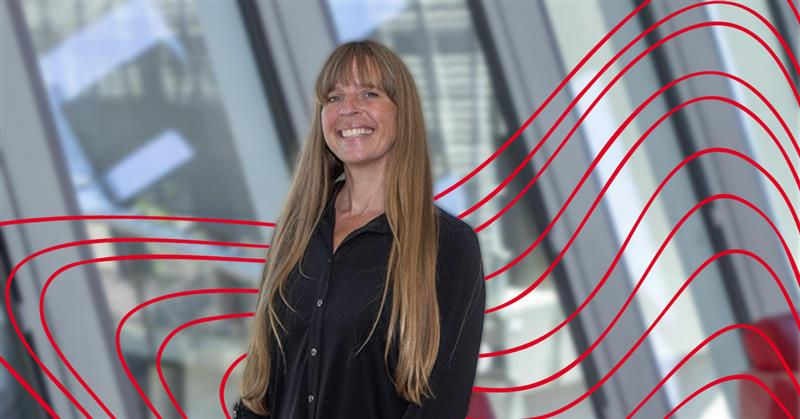
“At heart, I’m a down-to-earth, no-nonsense professor who genuinely loves to teach,” said Dr. Patty Goedl. However, Professor of Accounting is only one of the many titles she holds. She is also a Certified Public Accountant (CPA), editor, and author. More than anything, she is motivated to help students succeed—especially those who are underserved by traditional educational models.
We recently spoke with Dr. Goedl about her twenty-year teaching career, her passion for neuroinclusive education, and how she brings both to UC’s online Associate of Applied Business in Accounting Technology.
From Career to Classroom
Before coming to UC, Dr. Goedl worked for over a decade in the accounting field—including as a staff accountant, a job-cost accountant, an internal auditor, and a GS-11 accountant with the U.S. Department of Defense.
No matter the role, Dr. Goedl focused on building her professional skillset. She later channeled these experiences into her teaching, which allowed her “to bridge theory and real-world application in meaningful ways for students.”
While she was still working full time in the accounting industry, she got her first taste of teaching at the college level. She loved it. Her next move was to enroll in a PhD program and transition into a full-time accounting faculty member.
“I was drawn to accounting because of its conceptual foundation,” Dr. Goedl said. “Accounting is less about complex math and more about understanding systems: how financial information is categorized, recorded, and communicated to tell the story of an organization.”
What Is Neuroinclusive Education?
A major driving force for Dr. Goedl is her passion for neuroinclusive education—a movement designed to make higher education more accessible and inclusive for neurodivergent students, along with removing unnecessary barriers that don't account for diverse learning styles and needs.
For Dr. Goedl, this movement holds both personal and professional meaning. “As someone who is dyslexic, I have always known that my brain works differently. For much of my life, I viewed that difference as a deficit and learned to mask my challenges.” As a professor, she saw her own experiences mirrored by many of her students: they struggled within learning models that weren’t designed for neurodivergent learners, just like she had.
This was what led Dr. Goedl to take action and begin developing neuroinclusive degree programs at UC Clermont College. Neuroinclusive degree programs don’t ask students to adapt to rigid learning systems; instead, the program adapts to each student and offers diverse, inclusive support.
Neuroinclusive Education That Extends Beyond UC
Dr. Goedl is also actively involved with several neurodivergent advocacy organizations, which shapes her teaching, curriculum design, and assessment practices at UC.
“My experiences with students at UC Clermont, in turn, refine and strengthen that work,” Dr. Goedl added. “The new neuroinclusive degree programs are a direct expression of that reciprocal relationship, translating research and lived experience into scalable, sustainable academic pathways.”
Neuroinclusive education has also led Dr. Goedl into the publishing world. Along with her UC colleagues Dr. Meera Rastogi and Dr. Lori Vincent, Dr. Goedl is a co-editor and author of two chapters for The Handbook on Neuroinclusive Teaching, Course Design, and Student Support in Higher Education. The handbook draws from each editor’s experiences in higher education and provides evidence-based guidance for classroom instruction, student services, institutional policy, and post-grad pathways that are neuroinclusive.
Beyond institutional impact and educational evolution, Dr. Goedl has found her journey with neuroinclusive education personally transformative.
“I no longer see my dyslexic, neurodivergent mind as a flaw, but as a powerful cognitive style, one that informs how I teach, solve problems, and design learning experiences.”
Why UC?
Despite receiving job offers from multiple institutions, Dr. Goedl chose the University of Cincinnati. A strong reputation for research, rigorous academics, and student-centered education were crucial draws, but there was another deciding factor: UC Online’s long-standing commitment to high-quality online education.
“I am an unapologetic advocate for online higher education and have been teaching online for more than a decade,” Dr. Goedl shared. “I fundamentally believe that a well‑designed online course is equivalent to, and in many cases can exceed, the effectiveness of traditional face‑to‑face instruction when it is intentionally structured and well supported.”
To Dr. Goedl, UC Online strikes an excellent balance between academic quality and comprehensive, accessible student support services. As a result, she shared that UC Online was also an early supporter and strong partner in developing neuroinclusive programs.
“The innovative leadership, talented administrators, skilled instructional designers, and dedicated support staff at UC Online make it possible to move beyond traditional models and create flexible, inclusive learning experiences.”
Advice for Online and Nontraditional Learners
When asked for advice to online students—in the accounting program or another field entirely—Dr. Goedl stressed the importance of taking your own situation and needs into account. She completed her education as a working single mother and had to tackle the same challenges of balancing school, work, and family.
“My advice is to begin when you are ready and move at a pace that is manageable for your life,” she said. “Progress does not have to be fast to be meaningful. Whether that means taking one course at a time, studying online, or building in breaks when needed, success comes from staying the course until you reach the finish line.”
However, according to Dr. Goedl, the one factor that should not play into your decision is whether your learning style will be supported. Her investment in neuroinclusive education extends here, too: she believes that educational experiences must be designed to “accommodate real lives,” not require that you put yours on pause until you graduate.
And for students concerned about pursuing an online degree, Dr. Goedl shared: “For me, online teaching is not a compromise; it is an opportunity to design learning experiences that are purposeful, flexible, and inclusive by design.”
Ready to Explore Neuroinclusive Online Programs? Contact UC Today
As for Dr. Goedl’s parting thoughts?
“The personal philosophy that most strongly guides my work, and my life, is simple: everyone belongs,” she said. “That belief shapes how I live and teach, and how I advocate for students who may be questioning their place in higher education.”
We’re so grateful for the incredible work that Dr. Goedl is accomplishing within both the accounting program and UC as an institution. If her words resonated with you—both the obstacles she faced and the steps she’s taking to dismantle them—then you belong at UC, too.
To explore online neuroinclusive programs at UC, connect with your Enrollment Services Advisor today.

Ready to get started?
We offer over 130 degrees from undergraduate to doctoral programs. Each program is supported by a team of Enrollment Services Advisors (ESAs) who are here to help answer any questions you have.