Online Medical Laboratory Science Certificate
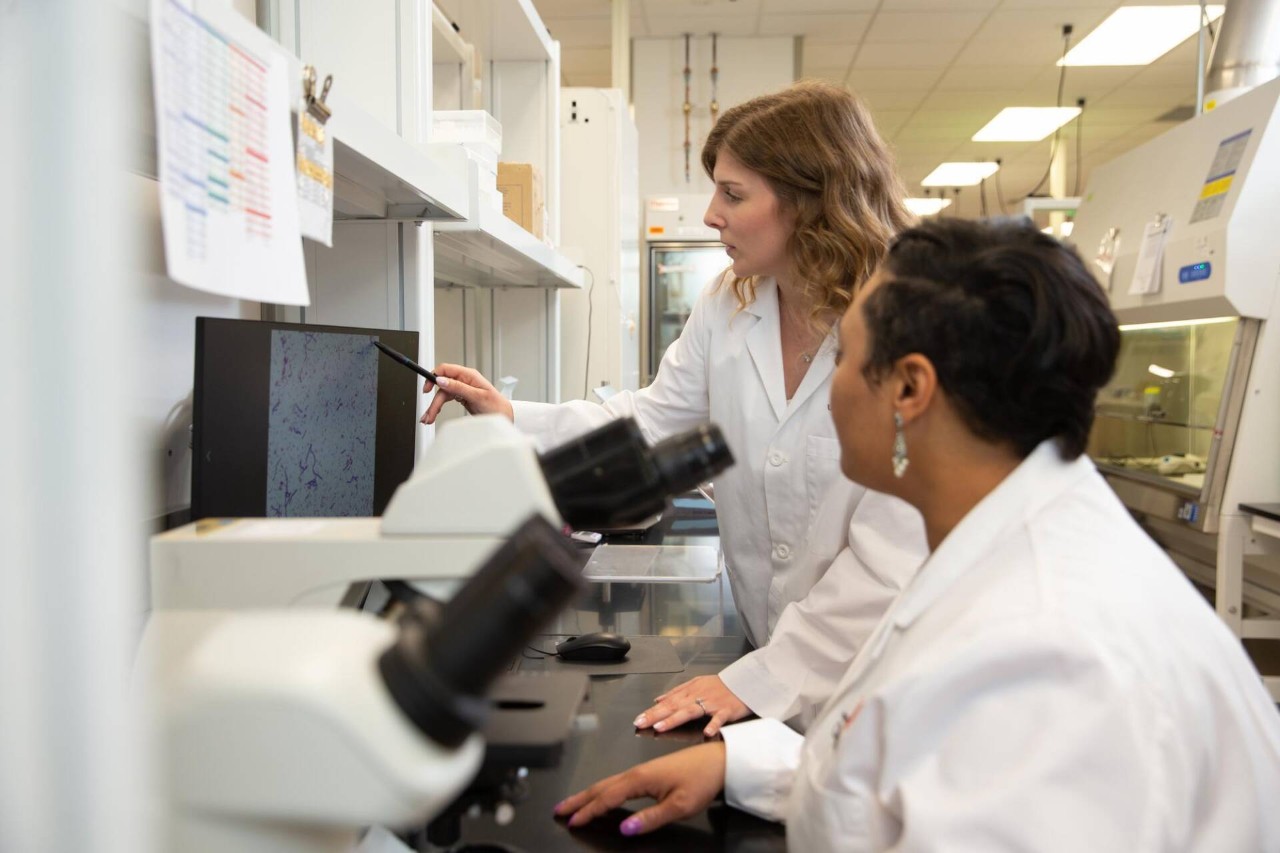
The Online Post-Baccalaureate Certificate in Medical Laboratory Science prepares individuals who already hold a bachelor's degree to become a Medical Laboratory Scientist. The program combines asynchronous online coursework with required in-person clinical education to prepare graduates for professional practice in clinical laboratories.
Program Overview
Advance your career in laboratory medicine with the University of Cincinnati's Medical Laboratory Science Certificate. Designed for individuals who already hold a bachelor's degree in a biological science or chemistry, the certificate prepares students with the scientific knowledge, clinical education, and professional competencies required to become a Medical Laboratory Scientist.
Medical Laboratory Science Certificate
The Medical Laboratory Science certificate provides broad preparation across the major disciplines of the clinical laboratory. Students develop the scientific knowledge and technical proficiency needed to perform and evaluate manual and automated testing in:
- Clinical chemistry
- Microbiology
- Hematology
- Immunology
- Toxicology
- Blood banking
- Molecular diagnostics
Students also learn laboratory information systems, quality control, and quality assurance used in modern clinical laboratories
Clinical Education
Students complete required clinical practicum experiences after completing the program's core didactic coursework. Clinical education occurs in approved clinical laboratories and provides hands-on experience while developing technical proficiency and professional practice skills.
Students are responsible for arranging their own clinical placement, typically through an employer, employer network, or community laboratory. All clinical sites must be approved by the University of Cincinnati and complete a clinical affiliation agreement before a placement can begin.
Individual clinical schedules are coordinated between the student, clinical preceptor, and UC Director of Clinical Education.
Students with qualifying professional laboratory experience may apply for academic credit toward clinical requirements. Credit is awarded only after review of required competencies and successful completion of related MLS coursework. Students should speak with an Enrollment Services Advisor for additional information.
Certification Eligibility
Graduates are prepared to apply for the American Society for Clinical Pathology (ASCP) Board of Certification examination for the Medical Laboratory Scientist (MLS(ASCP)) credential through Route 1.
The UC Medical Laboratory Science program provides guidance during the certification application process and verifies eligibility after students complete all certificate requirements.
Program Highlights
High Quality Education
- Expert faculty: Learn from experienced faculty with expertise across the major disciplines of medical laboratory science.
- Comprehensive laboratory training: Build knowledge and technical proficiency in clinical chemistry, microbiology, hematology, immunology, toxicology, molecular diagnostics, and blood banking.
- Clinical education: Gain hands-on experience through supervised clinical practicum experiences completed in approved clinical laboratories.
- Certification preparation: Prepare to apply for the ASCP Board of Certification examination for the Medical Laboratory Scientist (MLS(ASCP)) credential through Route 1.
Flexibility
- Asynchronous online coursework
- Required in-person clinical education completed in approved clinical laboratories
- Traditionally completed in seven semesters while attending part time
- Accelerated completion may be available; students should speak with an Enrollment Services Advisor to discuss options
- Cohorts begin each spring, summer, and fall semester
Support from Application through Graduation
At UC, you’ll have a full support team behind you:
Enrollment Services Advisor: Your go-to resource during the application process
Student Success Coordinator: Helping you prepare for classes and stay on track
Access to Resources: Access to university resources that will support you through your program including online learning expectations and resources, health and wellness resources, and academic support
Curriculum
The Medical Laboratory Science certificate comprises the complete professional curriculum of UC's NAACLS-accredited Medical Laboratory Science program, including all required didactic coursework and clinical education.
Because students entering the certificate already hold a bachelor's degree, the certificate includes only the professional Medical Laboratory Science curriculum and does not include general education or bachelor's degree requirements.
All students start the program with the required first semester courses.
| Course | Title/Description | Credit |
|---|---|---|
| MLSC 3005 | Transition to Medical Laboratory Science Practice This course provides a comprehensive overview of the medical laboratory science profession, preparing students for advanced studies in laboratory medicine. Topics include laboratory safety, specimen collection and handling, quality, accreditation, licensure, and the fundamentals of measurement techniques and diagnostic testing. Emphasis is placed on understanding laboratory operations, the diagnostic process, laboratory specializations, and the critical role of laboratory professionals in patient care and disease management. Students will develop foundational skills to support their transition into the medical laboratory science certificate program. |
3 |
| MLSC 3063 | Principles of Molecular and Immunological Studies This course will provide a foundational study of molecular biology and immunological principles. Topics will include the structure, function, and synthesis of DNA, RNA, and involved proteins, mechanism of inheritance, and physiology of the immune system. Basic laboratory testing in immunologic and molecular methodologies and principles will also be covered. |
3 |
| MLSC 3052 | Special Topics in Medical Laboratory Science An objective look at the field of Medical Laboratory Science from its inception, and leadingup to current and future technologies with an emphasis on current topics such as ethical and social concerns, governmental issues, professionalism and health care delivery. |
2 |
The Rotating Didactic Content Courses are offered on a rotating basis every four semesters. Students are required to earn a C- or better in all courses in each series.
| Course | Title/Description | Credit |
|---|---|---|
| MLSC 4053 | Advanced Clinical Molecular & Immunological Diagnostics An advanced study of clinical immunology and molecular biology, focusing on classical and emerging diagnostic applications using molecular and immunologic principles. Topics will include routine and complex testing techniques used across laboratory disciplines. Additional coverage will include immunologic and molecular mechanisms of inheritance and disease, related testing and ethical implications. |
3 |
| MLSC 4062 | Principles of Immunohematology A study of the theory, principles, and procedures associated with transfusion medicine. Discussions cover routine procedures, blood donors, components, regulations, and quality assurance. |
2 |
| MLSC 4063 | Advanced Immunohematology A more advanced study of the theory, principles, and procedures associated with transfusion medicine. Discussions cover specialized procedures, advanced applications and quality assurance. |
3 |
The Rotating Didactic Content Courses are offered on a rotating basis every four semesters. Students are required to earn a C- or better in all courses in each series.
| Course | Title/Description | Credit |
|---|---|---|
| MLSC 4051 | Clinical Chemistry A study of serum and fluid chemistry in normal and pathological states and methods of analysis. Topics in this first course of a series of two include discussions on normal physiology as well as correlation of normal and abnormal human physiology as they relate to organ system function. |
2 |
| MLSC 4066 | Advanced Clinical Chemistry A study of serum and fluid chemistry in normal and pathological states and methods of analysis. Topics in this second course of a series of two include continued discussions on normal physiology as well as correlation of normal and abnormal human physiology as they relate to organ system function. Advanced topics include critical analysis and interpretation of clinical chemistry data. |
4 |
| MLSC 3054 | Clinical Fluid Analysis A study of renal function and urinalysis procedures and body fluid examination. |
2 |
The Rotating Didactic Content Courses are offered on a rotating basis every four semesters. Students are required to earn a C- or better in all courses in each series.
| Course | Title/Description | Credit |
|---|---|---|
| MLSC 3056 | Hemostasis A comprehensive study of the blood clotting systemin normal and pathological states, which includes discussions regarding the correlation of test results with diseases. |
1 |
| MLSC 4057 | Hematology A study of blood and blood cells in a normal state from development through senescence. Topics in this first course of a series of two include discussions on correlation of test results with the cells morphological appearance. |
2 |
| MLSC 4068 | Advanced Hematology This second course in a series of two studies the blood and blood cells in abnormal or malignant states. Topics include discussions on normal and abnormal hematopoiesis and Red Blood Cell and White Blood Cell disorders as well as the correlation of test results with disease states and therapies. Advance topics include critical analysis and interpretation of hematological data and Platelet disorders. |
3 |
The Rotating Didactic Content Courses are offered on a rotating basis every four semesters. Students are required to earn a C- or better in all courses in each series.
| Course | Title/Description | Credit |
|---|---|---|
| MLSC 4059 | Special Microbiology This course is a focused study of special microbiology. Clinically relevant fungal, parasitic, and viral pathogens are covered. Emphasis is placed on diagnostic forms and clinical correlation of laboratory findings. |
2 |
| MLSC 4060 | Clinical Microbiology A study of the microorganisms associated with human infectious processes. Discussions include the characteristics, isolation, identification, and clinical infections associated with pathogenic microorganisms. |
2 |
| MLSC 4061 | Advanced Clinical Microbiology A continued study of the microorganisms associated with human infectious processes. Discussions include the characteristics, isolation, identification, and specialized antimicrobial techniques associated with pathogenic bacteria, as well as the role of the microbiology lab in the health care setting. |
4 |
Credit hours may vary in semester 6. Qualified students may apply for Life Experience Credit through the Office of Prior Learning Assessment. If awarded, the student will receive advanced standing credit for a portion of the MLSC4069: Advanced Clinical Practice course, which is a variable credit hour course. To enter the clinical semester, students must successfully complete all courses from previous semesters and be in good academic standing (earned grades of C- or better in all courses and have a cumulative GPA of 2.25 or greater). Students must also submit the required Clinical Practice materials and Health Packet by the published deadlines and complete annual training sessions in OSHA Bloodborne Pathogens, OSHA Hazardous Communications, and HIPAA Privacy Introduction. These trainings are offered online at UC at no charge to the student. Failure to meet any published deadline for these requirements may delay program progression and completion.
| Course | Title/Description | Credit |
|---|---|---|
| MLSC 3051 | Laboratory Operations A study of the basic principles of clinical laboratory management, including theory and practice. Topics will include personnel and financial management, regulation and accreditation, information management, quality assurance, quality control, clinical and continuing education. |
2 |
| MLSC 4069 | Advanced Clinical Practice A clinical practicum experience that will focus on advanced, applied clinical laboratory techniques and concepts. The practicum experience will be individually designed for each student; the student will participate in identifying the practicum site. Included is a focused study of laboratory techniques and instrumentation as they apply to diagnosing disease. |
1-8 |
| Course | Title/Description | Credit |
|---|---|---|
| MLSC 4071 | Advanced Clinical Correlations This advanced course will focus on further development of critical thinking and problem solving skills in all of the laboratory disciplines, as well as integration of laboratory analyses, interpretation and application. Activities include discussions, case studies, interactive activities and assignments, focused reviews and examinations. Mastery of content will be assessed through a comprehensive examination. |
3 |
| MLSC 4058 | Medical Laboratory Science Capstone A course in which students participate in a series of current topic seminars culminating in the development and presentation of a fundamental research project involving an aspect of state-of-the art clinical laboratory science practice. Under the direction of faculty, students prepare a written report and publicly present their findings. |
3 |
Admission Requirements
Prerequisites
- Bachelor's degree from an accredited college or university with a major in biological science or chemistry.
- Prior coursework should provide a strong foundation in biology, anatomy and physiology, chemistry, biochemistry or organic chemistry, microbiology, immunology, and molecular biology.
- Applicants must complete:
- a college-level statistics course
- a semester-length microbiology course with an in-person laboratory
- Recommended cumulative GPA of 2.5.
- We do not accept transfer credits for our online certificate programs.
Our Admissions Office is happy to work with you to answer any questions you may have and help determine your eligibility. To confirm you qualify for this program, please contact our enrollment team at onlineenrollment@uc.edu or (833) 556-8611 for assistance.
Complete the online application and submit the application fee.
Standard Application Fees*:
- $50.00 for domestic applicants to most degree programs
- $100.00 for international applicants to most degree programs
- Fee waivers are automatically applied for applicants who:
- are currently serving in the US armed forces
- are veterans of the US armed forces
*Application fees for online programs are waived through Spring 2027 for all applicants.
After submitting your application form, all applicants are required to have official transcripts sent directly to University of Cincinnati in order to be eligible for admissions review.
Please review the section below for guidance on how to submit your transcripts.
Online transcript request systems are the preferred method to deliver official transcripts electronically. To see if your transcript(s) can be ordered electronically, visit the links below and search for your previous school(s).
- Parchment
- Please select “University of Cincinnati – Main Campus” as the recipient of your transcript.
- National Student Clearinghouse
- Please have your transcript sent directly to admissions@uc.edu.
If you do not see your past school(s) listed on either site, please contact the school(s) directly to determine their ordering process.
If a physical copy must be sent, DO NOT request it be delivered to you. It must be sent directly from your prior school to the following address:
University of Cincinnati
Office of Admissions
PO Box 210091
Cincinnati, Ohio 45221-0091
Two professional references required; one must be from a current lab supervisor. Reference forms are submitted via the application system.
This is an online program and does not meet federal requirements for international students planning to attend on a visa. International students with questions should contact UC's International Services at 513-556-4278.
Application Deadlines
| Term | Application Deadline | Classes Start |
|---|---|---|
Spring 2027 Summer 2027 Fall 2027 |
November 15, 2026 March 15, 2027 July 15, 2027 |
January 11, 2027 May 10, 2027 August 23, 2027 |
Tuition & Fees
The University of Cincinnati's online programs allow students to pursue degrees without having to quit their jobs. Our online courses offer the same quality education found on campus in a modern format that fits students’ tight budgets and busy schedules.
The University of Cincinnati's online course fees differ depending on the program.
To view tuition information and program costs, visit the Online Program Fees page.
Accreditation & Rankings
- The University of Cincinnati and all regional campuses are accredited by the Higher Learning Commission.
- The University of Cincinnati Bachelor of Science in Medical Laboratory Science program is accredited by the National Accrediting Agency for Clinical Laboratory Science (NAACLS)
- 5600 N. River RD, Suite 720 Rosemont, Il 60018-5119 | Phone: 773.714.8880 | Email: info@naacls.org
View the Medical Laboratory Science Program Outcomes, including graduation rates, placement rates, and ASCP Board of Certification pass rates.
Licensure & State Authorization
Federal regulations require the University of Cincinnati to publicly disclose whether completion of certain programs that lead or may lead to professional licensure or certification would meet a given state’s educational requirements for a specific professional license or certification required for employment in an occupation (regardless of whether the program is on-ground, online, or hybrid). To learn whether a University program meets a given state’s educational requirements, please visit the University of Cincinnati State Authorization webpage.

Ready to get started?
We offer over 130 degrees from undergraduate to doctoral programs. Each program is supported by a team of Enrollment Services Advisors (ESAs) who are here to help answer any questions you have.